October 16, 2026Privacy
Privacy by Design: Why This Principle Is Shaping the Future of Digital Risk Management


 The Limits of Traditional Fraud Prevention and Emerging Risk IndicatorsTechnological Challenges: The Economics of Personal Data StorageExcessive Data Collection Expands the Attack SurfaceNew Tools for Fraud Prevention TeamsISO and SOC 2: Process Certification vs. Data ArchitectureFound this useful? Get the next article in your inbox

In the financial sector, Privacy by Design has traditionally been viewed as a principle for protecting personal data and meeting regulatory requirements. However, its significance extends far beyond compliance. For banks and financial institutions, reducing the amount of personal data they process is a way to mitigate operational and regulatory risks. For fraud prevention systems, it creates an incentive to develop risk assessment technologies that do not rely on direct personal identifiers.
Privacy by Design is an approach to system design in which the protection of end users' personal data is built into a product's architecture from the outset, rather than added later as a separate feature. Today, this is no longer solely the responsibility of compliance teams. For risk management and fraud prevention leaders, the choice of data determines not only a system's risk assessment capabilities but also the costs of processing and protecting that data. At the same time, the need to limit personal data collection is driving the development of new technologies capable of detecting fraud without relying on direct user identifiers.
In this article, we examine how Privacy by Design is changing the way fraud prevention systems are built and helping reduce the risks associated with data processing and storage. We also explore technologies that enable risk assessment without direct personal identifiers and the challenges they help address.
Historically, fraud prevention systems have evolved by expanding the range of user data available for analysis. Risk assessment draws on credit histories, transaction records, personal data, device characteristics, and other attributes. The more information a system has, the greater its potential to detect fraud. However, this approach also increases the volume of data that financial institutions must store, process, and protect.
As personal data regulations become more stringent — from the GDPR in Europe and the DPDP Act in India to similar legislation in Brazil, Canada, China, Singapore, and the UAE — and as Google and Apple introduce further restrictions, collecting and using user data is becoming increasingly complex and costly for businesses.
Restrictions on the use of identifying data are pushing advanced fraud prevention systems to identify non-correlatable risk indicators that are absent from both traditional credit bureau data and conventional antivirus solutions. These include device characteristics, digital environment parameters, and behavioral dynamics within individual sessions.
Major technology trends are turning accumulated personal data from a business asset into a significant operational, regulatory, and reputational liability. Today's risk management teams must consider two fundamental factors:
Applying Privacy by Design can reduce the potential damage from these threats. If a fraud prevention system does not collect passport details, full names, contact information, or other direct identifiers in the first place, this information cannot be exposed through a breach of that system. Technical and behavioral data still require protection, but using them reduces the amount of personal information shared with external providers.
At JuicyScore, we have not only eliminated the need for direct personal identifiers but also actively use quantum-resistant algorithms for key components of our systems and products, substantially strengthening the protection of non-personal data processing.
The risk of a data breach can never be completely eliminated. The more external systems and service providers are involved in processing customer data, the harder it becomes to maintain control over security across the entire data processing chain.
Any data an organization collects, transmits, or stores eventually becomes part of its attack surface. Major incidents demonstrate that even well-protected infrastructures remain vulnerable:
This raises a fundamental practical question for every IT provider: which data does your product genuinely need to perform its business function?
If a fraud prevention platform does not require a particular category of sensitive information, financial institutions can avoid allocating a substantial share of their IT budgets to securing its storage, providing cryptographic protection, managing access, and auditing compliance with regulatory requirements such as the GDPR or stringent national personal data protection laws.
Limiting personal data collection is driving the development of technologies that detect fraud by analyzing device characteristics, user behavior, and other signals that do not require direct personal identification.
These technologies are gradually becoming an important part of the risk management toolkit, alongside credit bureau data and transaction-based models. Below are the main areas of development that are particularly relevant in the context of Privacy by Design.
| Technology | What It Analyzes | Business Impact / Metric |
|---|---|---|
| Multi-layer Dynamic Authentication | Cross-session device fingerprints. | Reduces the need for costly SMS-based verification by 30–40% or more for trusted devices. |
| In-Session Behavioral Biometrics | Typing speed, patterns of switching between input fields, and mouse movement behavior. | Detects botnet activity and certain social engineering scenarios, including money mule activity, with accuracy of up to 85–90%. |
| Rare Event Scoring | Signals or situations that occur too infrequently for conventional models to learn from historical data, yet provide highly informative indicators of actual intent and risk within online sessions. | Reduces overall fraud losses by 30–70% or more. |
| Probabilistic Detection of High-Risk Signatures | Combinations of indicators associated with emulators, remote access tools (RATs), and automation. | Enables attacks involving remote access tools, such as AnyDesk and TeamViewer, to be blocked before a transaction takes place. |
| Next-Generation Probabilistic Device IDs | Devices are recognized through combinations of attributes, with a probability assigned to each potential match. | Such identifiers are considerably harder to spoof and much easier to manage. |
| Runtime Application Self-Protection (RASP) | Real-time interference with application execution, including debugging and code tampering. | Protects mobile banking applications against execution in compromised environments, including rooted or jailbroken devices and more than 20 additional scenarios. |
The table highlights technologies already familiar to the market. New approaches are emerging alongside them, and the range of available tools will only continue to expand.
At JuicyScore, we are actively developing solutions in these areas: exploring new signals, building technologies to analyze them, and validating their effectiveness against real-world data. We expect these tools to become an integral part of modern fraud prevention systems in the coming years.
For established technology providers serving the financial sector, ISO 27001 certification and SOC 2 audits have become baseline requirements. They demonstrate that an organization has established information security processes, clearly defined responsibilities, and regular external audits.
However, an important distinction must be made: certification demonstrates the maturity of information management processes, while Privacy by Design architecture prevents sensitive data from entering the fraud analysis environment in the first place.
At JuicyScore, both principles underpin our product development. Our technology stack was designed from the outset to enable effective fraud prevention without requiring data that directly identifies individuals. Through in-depth analysis of technical environment characteristics, connection parameters, and behavioral signals, we achieve the highest possible level of anomaly detection without adding the operational costs associated with personal data infrastructure.
Security standards and regulatory requirements will inevitably continue to evolve in response to the changing threat landscape. For digital risk management leaders, relying solely on traditional models based on historical data is no longer sufficient. They must adopt architectural principles that enable fraud detection without continuously expanding the volume of personal data collected.
The value of next-generation fraud prevention lies not in how much data a system accumulates, but in the knowledge and insights it can derive without that data. Privacy by Design provides a powerful incentive for this evolution: restrictions on data collection are driving technological innovation in risk assessment and the discovery of new signals.
Privacy by Design is just one shift reshaping fraud prevention. Subscribe to the JuicyScore newsletter to follow the rest – from new device and behavioral signals to changing data regulation.

Not all DeviceID solutions hold up across browsers and private modes. Here's a simple 8-browser test fraud teams can run in 10 minutes to measure real stability – and what the results say about your current setup.


Despite the hype surrounding LLMs, their application in risk management requires a measured and critical assessment. What are the real use cases, the key limitations, and the reasons why generative models cannot directly replace traditional fraud prevention approaches?
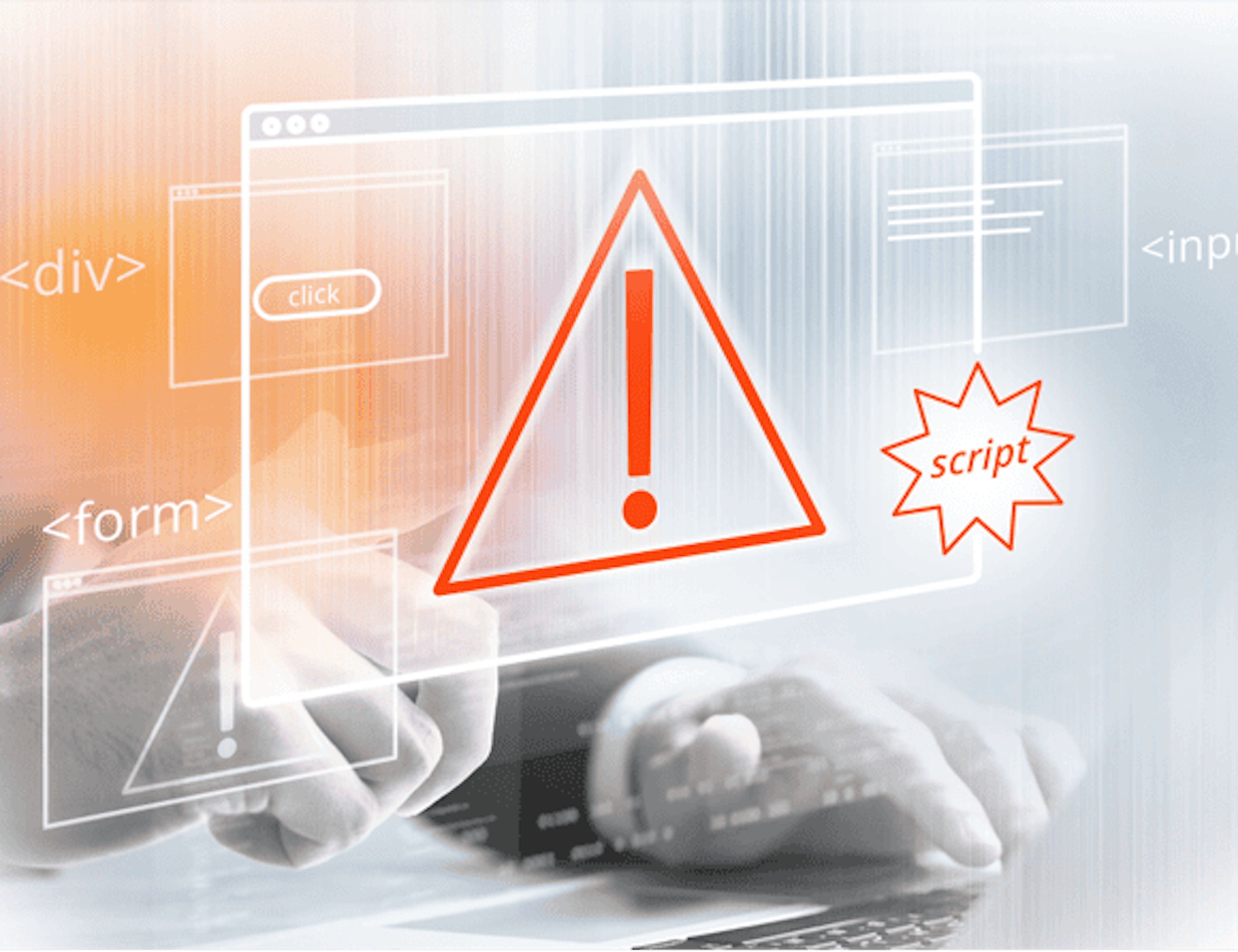
Modern web applications use dynamic interfaces based on the DOM (Document Object Model).

Get a live session with our specialist who will show how your business can detect fraud attempts in real time.
Learn how unique device fingerprints help you link returning users and separate real customers from fraudsters.
Get insights into the main fraud tactics targeting your market — and see how to block them.
Phone:+971 50 371 9151
Email:sales@juicyscore.ai


Our dedicated experts will reach out to you promptly